Safety Feature #3: Rollover resistance

Last week we talked about the things you need to consider when evaluating a vehicle’s overall safety.

The range from how it performs in an emergency-handling situation and how it protects its occupants in a collision to how easy it is to secure a child seat. When comparing vehicles, it’s important to look at all the appropriate variables, including safety-related ratings and features.

For the next couple of days we will be listing the rest of the top 10 safety checks that are worth reviewing before you make your final buying decision. Here is number 3

Taller vehicles, such as SUVs and pickups, are more likely to roll over than passenger cars. According to the IIHS, SUVs have a rollover rate that is two to three times that of passenger cars. In 2006, 59 percent of all SUV fatalities and 48 percent of pickup-truck fatalities involved a rollover. In contrast, only 25 percent of passenger-car fatalities involved a rollover.

A taller vehicle has a higher center of gravity, which makes it more top-heavy than one that sits lower to the ground. In a situation where a vehicle is subjected to strong sideways forces, such as in a sudden cornering maneuver, it’s easier for a taller vehicle to roll over.

To give consumers a way of telling which vehicles have a higher rollover propensity than others, NHTSA has developed a five-star rating system called the Rollover Resistance Rating (RRR). Until recently, the RRR was based solely on a vehicle’s “static stability factor (SSF),” which is determined from measurements of its track width and center of gravity. Because the SSF is based on measurements of a stationary vehicle rather than on a dynamic road test, the rating doesn’t account for vehicles’ different suspension designs, tires, or the presence of a stability-control system–any of which can make a significant difference. Beginning with the ratings for 2004 models, NHTSA has combined the SSF with a dynamic rollover test performed with moving vehicles.

The RRR is accessible online at www.safercar.gov, but you need to dig deeper than the star ratings to tell how a vehicle performed in the dynamic test. Click on the model name. Scroll down to “Rollover.” That section gives the predicted chance of a rollover in a single-vehicle crash, stated as a percentage of probability. The site tells you whether or not a vehicle tipped up in the test, but not at what speed. The top of the test-results page specifies if the vehicle had side air bags or stability control when it was tested.

We believe that vehicles that tip up in NHTSA’s test have a potential stability problem and CR will not recommend them, regardless of their star rating. In order for an SUV or pickup to be recommended, it must either have been included in NHTSA’s test and have not tipped up or, if it has not been tested, it must offer electronic stability control.

Visit of call Planet Ford 45 if you need further assistance understanding the safety features in our Ford Lineup.

Posted in Uncategorized | Leave a comment

Safety Feature #2

Last week we talked about the things you need to consider when evaluating a vehicle’s overall safety.

The range from how it performs in an emergency-handling situation and how it protects its occupants in a collision to how easy it is to secure a child seat. When comparing vehicles, it’s important to look at all the appropriate variables, including safety-related ratings and features.

For the next couple of days we will be listing the rest of the top 10 safety checks that are worth reviewing before you make your final buying decision. Here is number 2

Electronic stability control (ESC)
CR’s auto experts highly recommend electronic stability control, particularly on SUVs. ESC is designed to help keep the vehicle under control and on its intended path during cornering, and prevent it from sliding or skidding. If a vehicle begins to go out of control, the system selectively applies brakes to one or more wheels and cuts engine power to keep the vehicle on course. On SUVs, stability control can help prevent the vehicle from getting into a situation that could lead to a rollover. While electronic stability control has improved the emergency handling on the vehicles we have tested, it’s not a cure-all for inherently poor-handling vehicles. Its effectiveness depends on how it is programmed and how it is integrated with the vehicle. It also cannot overcome the laws of physics.

Automakers often refer to their stability-control systems by different names (see our guide to safety features), so if it’s not clear be sure to ask if a vehicle has electronic stability control. To make it less confusing for the consumer, the Society of Automotive Engineers has asked that all manufacturers use electronic stability control, or ESC, as common terminology when referring to their stability-control systems. Consumer Reports supports this move because it will help consumers know what they are buying.

A number of studies of ESC have been completed and all point to a substantial reduction in accidents and deaths. The IIHS has estimated that if all cars had ESC, it would save 10,000 lives per year. The National Highway Traffic Safety Administration has announced plans to require ESC as standard on all vehicles by the 2012 model year

Visit of call Planet Ford 45 if you need further assistance understanding the safety features in our Ford Lineup.

Posted in Uncategorized | Leave a comment

Safety Feature Must Have #1

You need to consider several factors when evaluating a vehicle’s overall safety. They range from how it performs in an emergency-handling situation and how it protects its occupants in a collision to how easy it is to secure a child seat. When comparing vehicles, it’s important to look at all the appropriate variables, including safety-related ratings and features. For the next couple of days we will be listing the top 10 safety checks that worth reviewing before you make your final buying decision.

1. Insurance-industry crash-test ratings
The Insurance Institute for Highway Safety (IIHS) is a safety-research group that conducts its own series of crash tests. In its frontal-offset crash, the IIHS runs a vehicle at 40 mph into a deformable barrier. Instead of engaging the whole width of the car’s front end, the barrier covers just the 40 percent of the car in front of the driver.

Using a deformable barrier simulates a car-to-car, driver’s-side-to-driver’s-side collision, which is a common form of fatal crash. By focusing the crash on only a portion of the car’s front, this test severely stresses the car’s structural integrity and its ability to protect the area around the driver without collapsing.

The IIHS scores its frontal-crash results as Good, Acceptable, Marginal, or Poor. You can find ratings for all tested vehicles on the IIHS Web site, at www.hwysafety.org.

Since 2002, the IIHS also has conducted its own side-impact tests, which simulate a vehicle being struck in the side at 31 mph by a vehicle the height and weight of a typical SUV or pickup. The test is more severe than the National Highway Traffic Safety Administration’s side-crash test (described below), which simulates a vehicle being hit in the side by a vehicle the height and weight of a typical family sedan.

For more information on crash testing and ratings click here.

Posted in Uncategorized | Leave a comment

Test Driving the EcoBoost

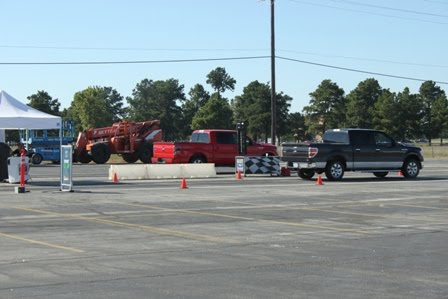
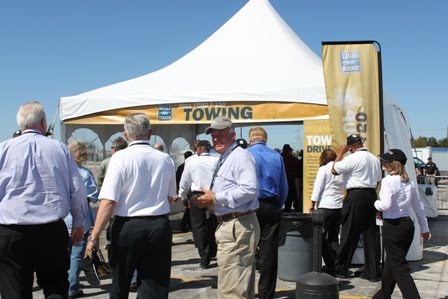
Planet Ford employees from both our 45 and 59 stores went to the 2011 Ford F150 Round Up event at Sam Houston Race Park to try out the new 2011 Ford F150. Our employees we’re looking forward to test driving the new 411-horsepower 6.2-liter V8, the 360-hp 5.0-liter V8 and the 300-hp 3.7-liter V6, but it was the top of-the-line EcoBoost V6 that had our employees were very excited for.

According to Ford the 3.5-liter twin-turbocharged EcoBoost V6 engine is tough enough to take whatever F-150 buyers can throw at it. So how is it possible to know if that’s true? Well our employees test drove the EcoBoost to the extreme to see if Ford could put their money where their mouth is (see pictures). Well we can honestly say that compare to the competition the EcoBoost is the best in class compare to its competition. Test driving the EcoBoost is nothing any of us have experience in a truck. Which we all agree that was a good thing since we see that Ford is moving forward in becoming the leader.

Don’t believe us? Stop by Planet Ford 45 when the EcoBoost arrives and test drive that baby.

Posted in Uncategorized | Leave a comment

My “Check Engine” light is on.


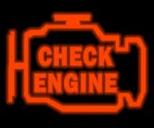
My “Check Engine” light is on. Why is it doing that? Should I ignore it?

It means your vehicle’s onboard computer system has self-diagnosed some kind of problem. The “Check Engine” light, which is also called a “Malfunction Indicator Lamp” (MIL) or “Service Engine Soon” (SES) lamp, is there to signal you when a problem occurs that may require attention. This can include anything from a momentary hiccup that has has little or no noticeable affect on engine performance or driving safety to a failure of a major electronic component. There’s no way to know what the light means without running a diagnostic scan on the system to determine the nature of the fault.

At Planet Ford 45 we seen people ignored their check engine light and a after weeks of ignorance the problem turned into a costly mistake. We recommend you visiting Planet Ford 45 and running a full diagnostic scan to see what the problem is. We want you to protect your investment and highly recommend you seeing what the problem is.

Posted in Uncategorized | Leave a comment

2012 Ford Focus ST

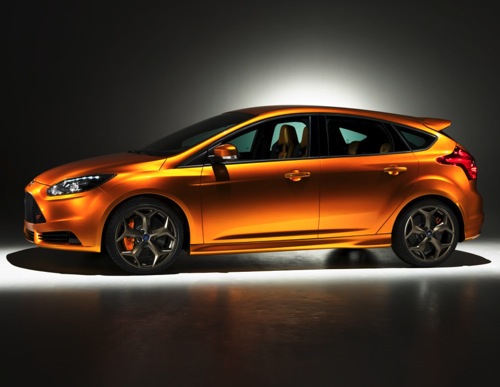
There has been a lot of buzz about the Paris Motor Show for many auto manufacturers, and Ford is no exception. The biggest announcement is the first official viewing of the new high-performance Ford Focus ST, and it will be the first time that production-ready Focus body styles will be featured together. This will be the first peek before models go on sale in Europe and North America in early 2011, and I pulled some more information for you from The Ford Story site:

The new range-topping Focus — which will feature a unique version of the 2.0-liter Ford EcoBoost engine — will be true to heritage of Ford ST models. It will offer driving enthusiasts a mix of exhilarating performance and handling, accompanied by an addictive sound.

The dramatic new ST will launch in early 2012 and will be revealed on September 30, 2010, at the Ford stand by Alan Mulally, Ford President and CEO, and Stephen Odell, Ford of Europe Chairman and CEO.

Visitors to the Paris Motor Show will immediately notice the car’s highly distinctive sports exterior, which is finished in Tangerine Scream, a dramatic new body color that reflects the exciting and energetic character of the Focus ST.

Ford is also moving forward with its electrification program and will be displaying for the first time the technology destined to drive its C-MAX plug-in hybrid vehicle, that will be produced at the Valencia plant in Spain.

The formal launch of the full production-ready Focus range in Paris signals the introduction of the first truly global product developed under the company’s ONE Ford strategy.

Developed at Ford’s Global Center of Excellence for Small Cars in Germany, for sale in over 120 markets worldwide, the next-generation model is the most important Focus yet. It is created from the new Ford global C segment platform with up to 80 percent parts-commonality globally. This platform will underpin at least ten vehicles around the world, and it will account for approximately two million units of annual production by 2012.

Posted in Uncategorized | Leave a comment

New App for Fiesta

Ford is the latest to jump on the Apple bandwagon, with a new iPad app for the 2011 Fiesta.

The Fiesta iPad app is essentially an interactive sales brochure, providing users with tech information, features, photos, videos and lots of extras.

One screen lists the available graphic treatments, including “tattoos.” Another details Fiesta’s safety features, while a third lists the various connectivity options.

The Fiesta app can be downloaded for free from Apple’s iTunes store.

Need help downloading the app. Visit us at Planet Ford 45 and let us show you how to downloaded to your iPhone.

Original Article


Posted in Uncategorized | Leave a comment

Can I recharge my A/C system myself?

A person came to the shop yesterday at one of our sister stores and ask a very important question to one of our mechanics. the question was how he can recharge his A/C system himself?

Well to summarize the answer here is pretty much what we told him.

You have all the right to recharge your A/C system however you must first get your hands on the correct type of refrigerant required for your vehicle.

The major problem with that is that federal law prohibits the sale of R12 and R134 automotive refrigerants to “non certified” individuals (to become certified, you must pass a written test approved by the Environmental Protection Agency (EPA) — something which all professional A/C technicians must do before they can legally work on your vehicle).

Our Service Advisor informed that to our customer and suggested that he let the certified professionals recharge his A/C system. The customer walked out a happy camper and a more knowledgeable person.

If you need your A/C recharge stop by Planet Ford 45 and let the professionals take care of it.

Posted in Uncategorized | Leave a comment

How Do You Know When Your Car Needs a Brake Job?

You need a “brake job” when your brake linings are worn down to the minimum acceptable thickness specified by the vehicle manufacturer or the applicable state agency in areas that set their own requirements. The only way to determine if new linings are required, therefore, is to inspect the brakes.

You may also need a brake job if you’re having brake problems such as grabbing, pulling, low or soft pedal, pedal vibration, noise, etc., or if some component in your brake system has failed. But if the problem is isolated to only one component, there’s no need to replace other parts that are still in perfectly good working order.

There is no specific mileage interval at which the brakes need to be relined because brake wear varies depending on how the vehicle is driven, the braking habits of the driver, the weight of the vehicle, the design of the brake system and a dozen other variables. A set of brake linings that last 70,000 miles or more on a car driven mostly on the highway may last only 30,000 or 40,000 miles on the same vehicle that is driven mostly in stop-and-go city traffic.

As a rule, the front brakes wear out before the ones on the rear because the front brakes handle a higher percentage of the braking load — especially in front-wheel drive cars and minivans.

So stop by Planet Ford 45 today and see how you can improve your braking system on your investment.

Original Article

Posted in Uncategorized | Leave a comment

Car Battery Help

How can I tell if my battery is low and needs to be recharged?

The first and most likely indication of a low battery would be a hard starting problem caused by slow cranking. If the battery seems weak or fails to crank your engine normally, it may be low. To find out, you need to check the battery’s “state of charge.”

A battery is nothing more than a chemical storage device for holding electrons until they’re needed to crank the engine or run the lights or other electrical accessories on your vehicle. Checking the battery’s state of charge will tell you how much juice the battery has available for such purposes.

If your battery is low, it needs to be recharged, not only to restore full power, but also to prevent possible damage to the battery. Ordinary automotive lead-acid storage batteries must be kept at or near full charge to keep the cell plates from becoming “sulfated” (a condition that occurs if the battery is run down and left in a discharged condition for more than a few days). As sulfate builds up, it reduces the battery’s ability to hold a charge and supply voltage. Eventually the battery becomes useless and must be replaced.

Recharging The Battery

CAUTION: Do not attempt to recharge a battery with low (or frozen) electrolyte! Doing so risks blowing up the battery if the hydrogen gas inside is ignited by a spark.

Your charging system should be capable of recharging the battery if it is not fully discharged. Thirty minutes or so of normal driving should be enough.

If your battery is completely dead or extremely low, it should be recharged with a fast or slow charger. This will reduce the risk of overtaxing and damaging your vehicle’s charging system. One or both battery cables should be disconnected from the battery prior to charging it with a charger. This will eliminate any risk of damage to your vehicle’s electrical system or its onboard electronics.

If you have any question feel free to contact or visit Planet Ford 45’s service department and ask for further assistance.

Remember be safe when working on electrical components.

Original Article Here

Posted in Uncategorized | Leave a comment